Dry ice production and supply
The oldest dry ice producer in the North of The Netherlands!
Dry ice
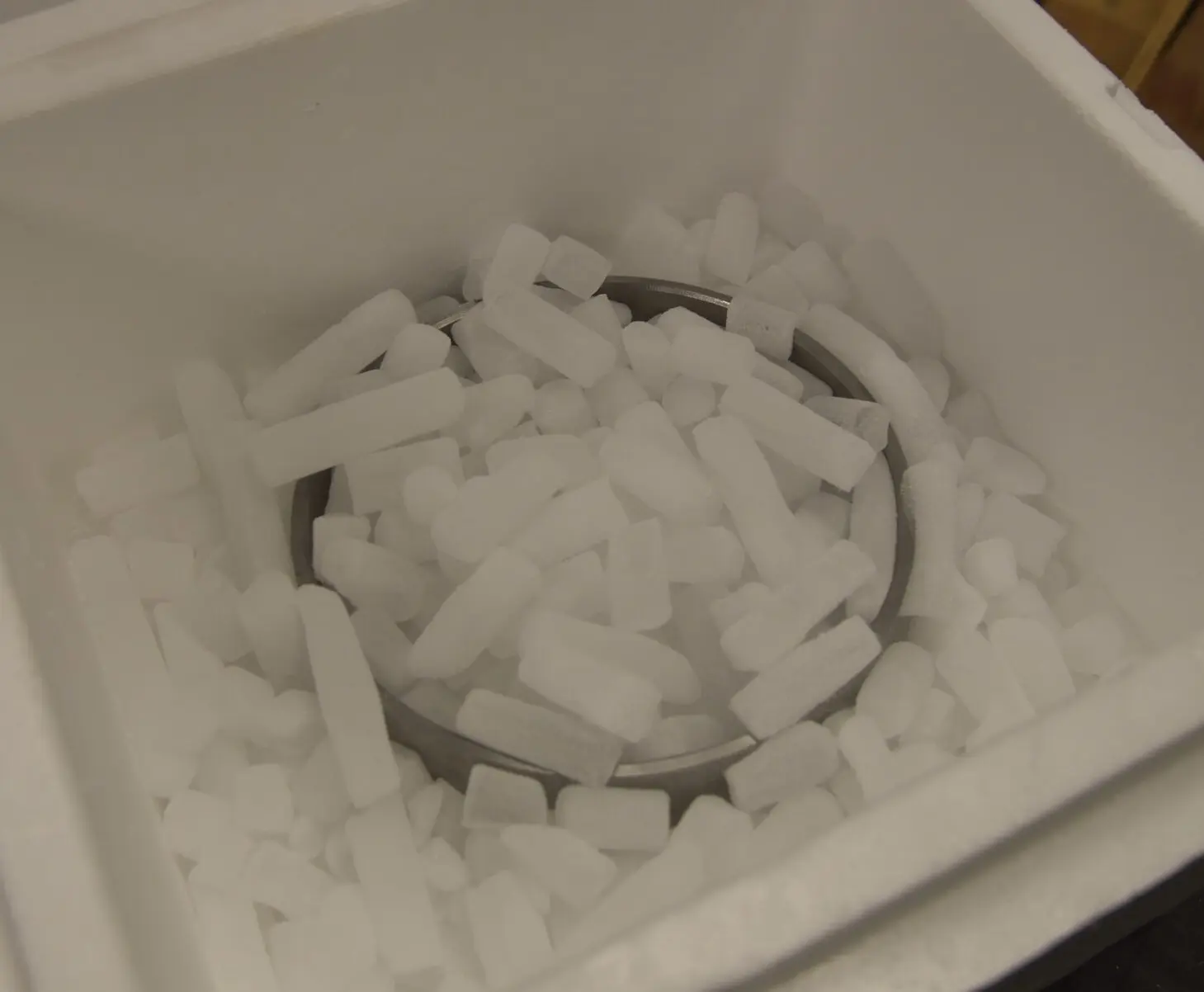
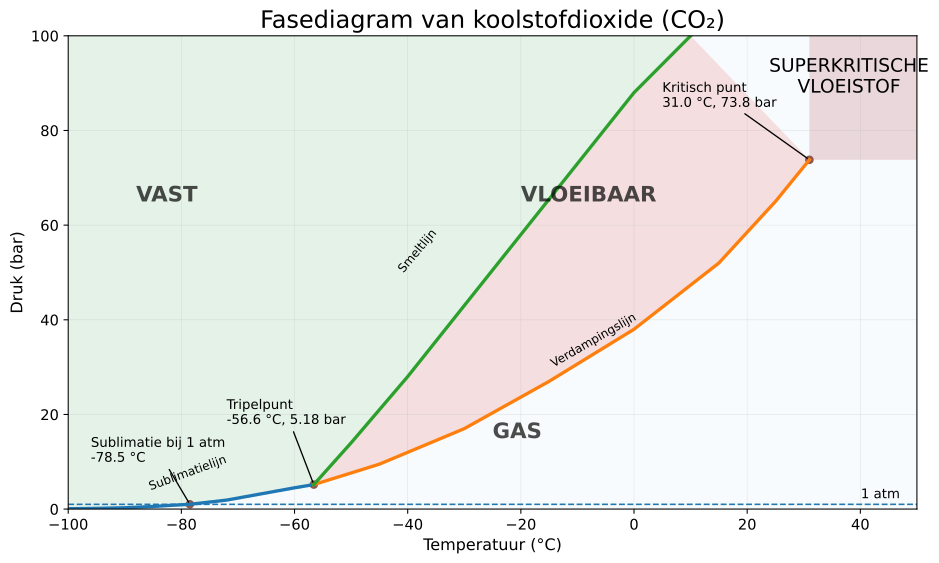
Dry ice is produced by allowing liquid carbon dioxide (approximately 15–18 bar) to expand under pressure, during which carbon dioxide gas and CO₂ snow are formed in a normal atmospheric environment. In our production facility, this snow is collected in a controlled chamber and compressed under pressure using a mould. The snow already has a temperature of -78.5°C, which is maintained after pressing. Depending on the mould used, the compressed dry ice shapes into different forms. Common formats include 10–19 mm pellets, 3 mm granules, as well as slices and blocks.
The choice of form depends on the application. For example, on board of aircraft in catering trolleys, small trays are used that accommodate dry ice slices for cooling purposes.
At present, we produce mainly 3 mm granules, primarily used for dry ice blasting (also known as dry ice cleaning), and 10 mm pellets, which are particularly suitable for packaging applications..
Blocks are more commonly used for larger shipments, such as deliveries to ships. You can purchase your dry ice here.


Applications of dry ice

Shipping frozen products
Because dry ice never passes through a liquid phase, everything remains dry. Dry ice maintains a temperature of -78.5°C, but its quantity gradually decreases as it transitions directly into the gas phase (sublimation). To minimize sublimation, insulated packaging with strong thermal properties should be used. Check out our Kelvinboxes!
Dry ice cleaning
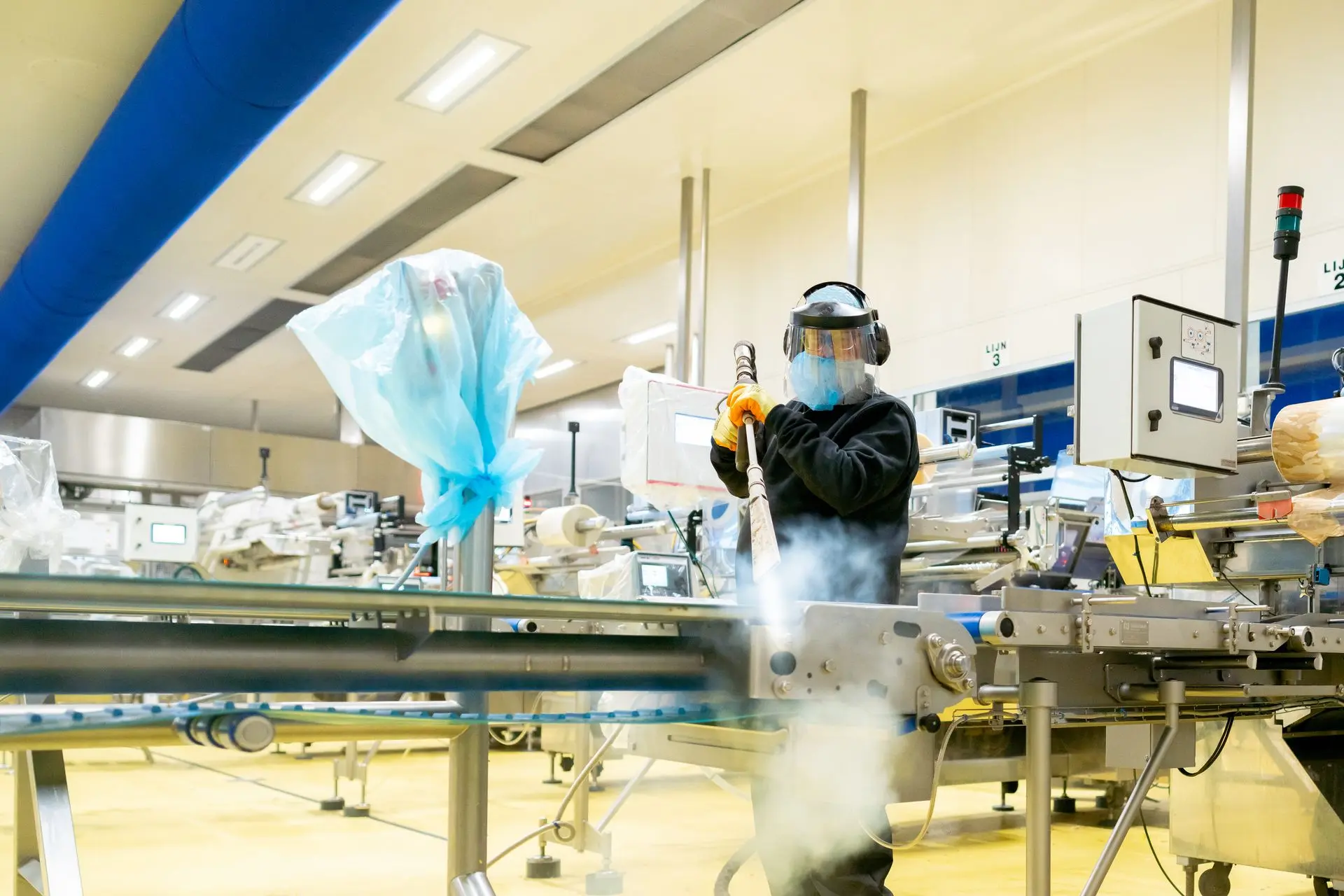
Dry ice blasting, now commonly referred to as dry ice cleaning, was developed in the 1970s by Lockheed Martin to remove paint from aircraft without damaging the underlying aluminum surface.
The term “blasting” is in fact somewhat misleading, as it is more commonly associated with grit blasting and other abrasive surface treatments.
Dry ice does not damage the surface being cleaned, unless the material itself lacks sufficient resistance. For this application, our 3 mm granules are used.
Shrink fitting of materials
At a temperature of -78.5°C, dry ice causes materials exposed to it over time to contract. This principle is commonly applied in processes such as fitting plastic bearing housings or alignment pins.
The same effect can be achieved using liquid nitrogen; however, at -196°C it may be excessively cold for certain materials

Fog and special effects
When dry ice is added to hot water, a dense fog is instantly created. The carbon dioxide released through the sublimation of dry ice is heavier than air. Because the fog consists of both steam and carbon dioxide, it tends to flow downwards. This effect is well known in theatres, where “smoke” appears to flow downstairs.
It is also reminiscent of the mist rising from a witch’s cauldron. There are many other creative applications for this effect.
Grocery delivery
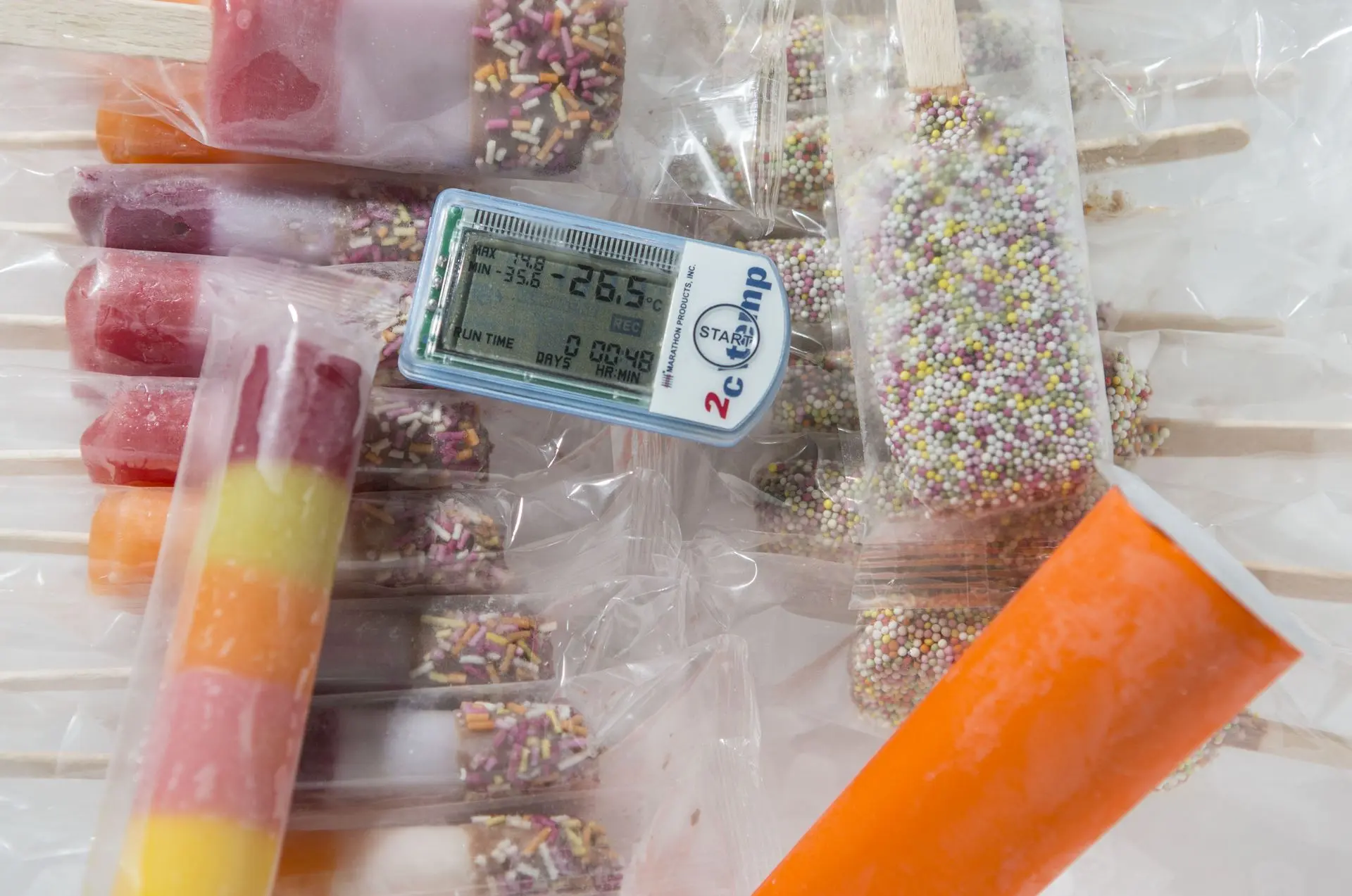
Dry ice or frozen gel packs are commonly used to maintain the correct temperature during the transport of groceries.
They are also ideal for personal use, for example to keep food frozen during a day trip or while travelling to a holiday destination.
Educational support
Dry ice can be used to create many engaging visual demonstrations in physics and chemistry lessons for students. A quick online search will show numerous examples of its educational applications.
Schools can collect dry ice from us free of charge for this purpose. We do not supply dry ice directly to minors and always provide detailed instructions on its safe handling. Refer to: safe handling of dry ice.
Our products & services
Kelvinbox BV
VAT: NL867538016B01
CoC: 96266430
IBAN: NL65INGB0110809807
Swift: INGBNL2A

Kelvinbox BV - About us
We are a team of dedicated professionals committed to supporting our clients. We deliver on our commitments and are transparent when a request falls outside the scope of what we can provide.